Craftsman Yard Tractor Attachments: Maximizing Your Landscaping Potential
Ready to transform your Craftsman yard tractor into a versatile landscaping powerhouse? This comprehensive guide will empower you to select, attach, maintain, and troubleshoot a range of Craftsman attachments, optimizing your yard work efficiency and enjoyment. We'll cover everything from choosing the right tools for your specific needs to addressing common maintenance and operational challenges. For information on similar equipment, check out this helpful resource on other tillers.
Figuring Out Your Needs: Selecting the Right Attachments for Your Yard
Before diving into specific models, assess your landscaping tasks. Do you need snow removal capabilities? Are you planning extensive gardening requiring tilling? Or are you primarily focused on lawn maintenance? Understanding your priorities will guide your attachment choices, preventing unnecessary purchases.
Here's a summary of popular Craftsman attachments:
Mowing Decks: Essential for lawn maintenance, available in various sizes to suit different yard dimensions. Consider your yard's size and terrain when selecting a deck size. (Larger decks are generally faster but may be less maneuverable in tight spaces).
Snow Throwers/Blades: Crucial for efficient snow removal from driveways and walkways. Select based on your region's typical snowfall. (A larger snow thrower is better suited to heavy snowfall, but it may be overkill in areas with minimal snowfall).
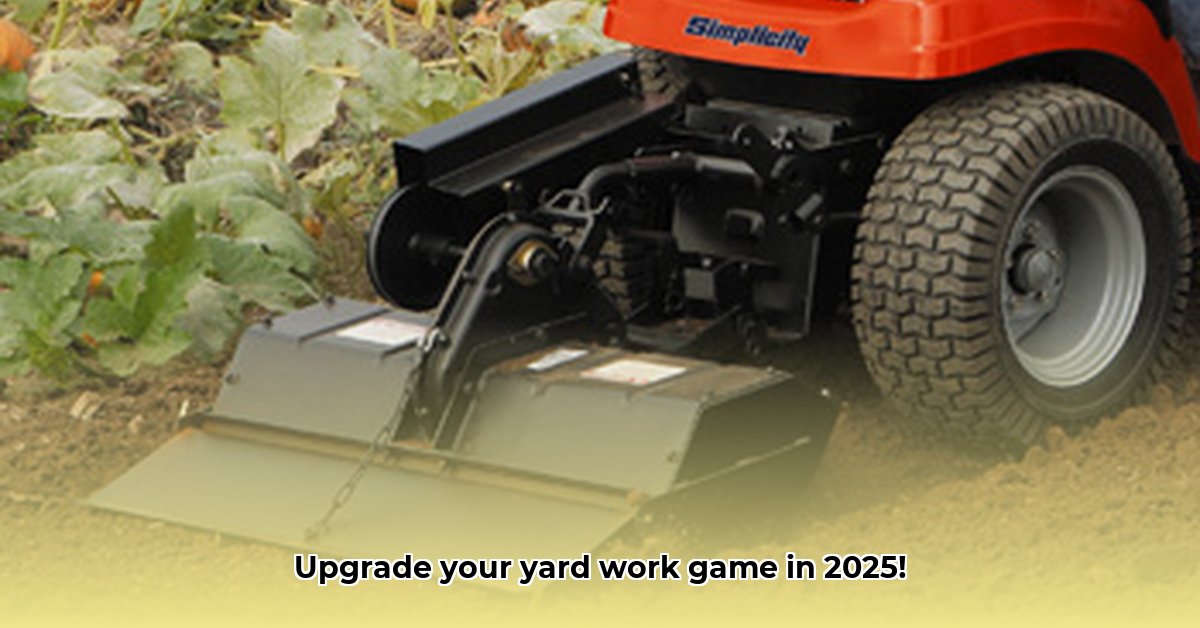
Tillers: Ideal for preparing soil for planting, offering varying tilling depths depending on your needs. (Consider the soil type and planting depth when choosing a tiller).
Spreaders: Streamline fertilizing and seeding your lawn. Choose a spreader appropriate for your yard's size and the material type. (Calibration is essential for even distribution of fertilizer or seed).
Aerators/Dethatchers: Improve soil health and lawn growth by removing thatch and loosening compacted soil, promoting better drainage. (Aeration is especially beneficial in high-traffic areas or lawns with heavy thatch build-up).
Baggers/Trailers: Useful for collecting grass clippings or hauling materials around your yard. Ensure your tractor has the necessary towing capacity. (Consider the weight capacity of any trailer you purchase).
Choosing the Perfect Craftsman Attachments: Ensuring Compatibility
Crucially, verify compatibility with your Craftsman tractor model. Consult your owner's manual or the manufacturer's website for precise specifications. Ignoring this step could lead to damage to your tractor. Pay close attention to:
- Hitch Type: Ensure the attachment's hitch matches your tractor's hitch system for a secure connection.
- Horsepower: The attachment should not exceed your tractor's horsepower rating to avoid strain and potential damage.
Attaching and Detaching Attachments: A Step-by-Step Guide
Safety is paramount. Always turn off your tractor and disconnect the power source before handling attachments.
Step 1: Secure the Hitch. Carefully connect the hitch mechanism, double-checking its secure engagement.
Step 2: Attach the Accessory. Follow the manufacturer's instructions meticulously, using the appropriate fasteners. Many models include diagrams or videos.
Step 3: Double-Check. Thoroughly inspect all connections. Ensure nothing is loose or dangling before restarting the tractor.
Step 4: Begin Slowly. Start with cautious operation to get a feel for the attachment before tackling heavy-duty tasks.
Detaching typically reverses these steps. Remember to always consult your owner's manual for specific instructions.
Maintaining and Troubleshooting Your Attachments: Extending Lifespan
Regular maintenance significantly prolongs your attachments' lifespan.
Cleaning: After each use, remove dirt, grass clippings, or debris. This prevents rust and corrosion.
Lubrication: Lubricate moving parts according to the manufacturer's recommendations to reduce wear.
Storage: Store attachments in a dry, protected area to prevent weather damage.
Common Problems & Solutions:
| Problem | Possible Causes | Solutions |
|---|---|---|
| Attachment won't engage | Hitch misalignment, worn parts | Recheck hitch alignment, replace worn parts as needed |
| Attachment malfunctions | Loose bolts, worn belts, insufficient lubrication | Tighten bolts, replace worn belts, lubricate moving parts |
| Excessive vibration | Imbalance, worn bearings | Check balance, replace worn bearings |
Maximizing Your Investment: Long-Term Considerations
While the initial cost of high-quality attachments may seem higher, the enhanced durability and longevity translate into long-term savings. Research and compare models before purchasing to find the optimal balance of quality, features, and budget. Remember, regular maintenance is key to maximizing the return on your investment. "Investing in reliable attachments is like investing in the longevity of your entire landscaping operation," advises Dr. Emily Carter, Professor of Agricultural Engineering at the University of California, Davis.
Choosing the Right Attachments for Diverse Terrains
Selecting the appropriate attachment depends directly on your terrain and needs. A bagging system is efficient on flat, even lawns, while a side discharge mower is preferable for sloped areas to prevent clogging. Consider your property size and your primary landscaping objectives when making your choices. Don't hesitate to consult professional advice if needed.
Understanding Compatibility and Technical Specifications
Confirm compatibility with your specific Craftsman tractor model. Check weight limits to prevent overloading and potential damage. Evaluate details like cutting width (for mowers) and snow-blowing capacity, ensuring they align with your needs and the scale of your landscaping projects.
A Step-by-Step Guide to Safe Attachment Handling
Always engage the parking brake and disengage moving parts before attaching or detaching accessories. Follow the manufacturer's instructions for precise guidance on specific models and attachments. Safety should always be the top priority.
Maintenance and Troubleshooting Strategies
Regular cleaning and lubrication prolong the lifespan and ensure optimal performance. Consult your owner's manual for troubleshooting guidance. Address issues promptly to prevent escalation into more substantial problems. Preventative maintenance is far more cost-effective than corrective repairs.